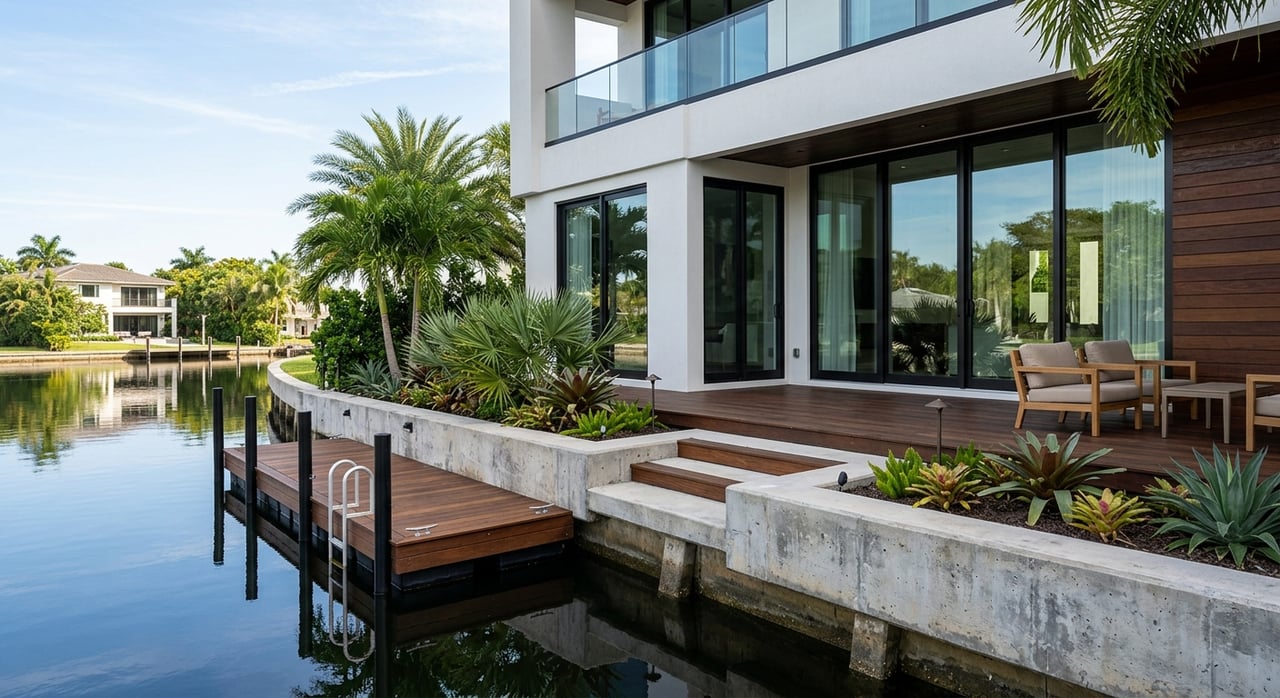
What to Know About North Palm Beach Boating Homes
If you picture a boating home in North Palm Beach as instant dock-and-go living, it is worth slowing down before you buy. In this village, the real value is not just waterfront scenery. It is whether the property truly supports the way you plan to use the water, from dock rights to launch access to insurance and flood considerations. If you want a purchase that fits your lifestyle and avoids costly surprises, this guide will help you focus on the details that matter most. Let’s dive in.
North Palm Beach is a coastal village about nine miles north of West Palm Beach, with roughly 13,000 year-round residents and about 15,000 in winter. The village describes itself as boating-oriented, and its location between the Intracoastal Waterway, the Atlantic Ocean, and Lake Worth supports that identity.
That boating appeal is backed by real infrastructure. Anchorage Park offers resident-only boat launch access, wet and dry storage, kayak launch access, and docks. At the same time, the village Marine Unit actively handles boating safety inspections, speed enforcement, and manatee-zone enforcement, which tells you this is a community where water access is taken seriously.
When you buy a boating home, a water view and a boating setup are not the same thing. A property may look ideal from the street or patio, but your decision should center on whether you have practical, legal, and reliable access for your boat.
In North Palm Beach, that can take several forms:
Each setup creates a different ownership and use experience. You want to know exactly what comes with the property before you make an offer.
A deeded dock is generally tied directly to the property, while an assigned slip may be controlled by an association, marina, or other governing body. That difference can affect your rights, your flexibility, and how predictable your access will be over time.
For that reason, one of the first questions to ask is simple: What exactly am I buying? If the dockage is not clearly deeded, you will want written confirmation of how access is assigned, transferred, and maintained.
Some buyers assume they can rely on the village marina if a home itself does not have ideal dockage. That can be risky. The village says its marina uses resident-only wet and dry storage on a waitlist basis, so access should never be treated as guaranteed.
If marina access is part of your plan, verify the current rules and availability early. It is much better to know this before you commit than to discover later that your preferred setup depends on a long waitlist.
In this market, waterfront does not come in one form. Buyers often compare canal-front homes with properties that have more direct water frontage.
Palm Beach County’s coastal geography includes canals, waterways, and drainage structures, while North Palm Beach sits on the Intracoastal side of that system. In practice, some buyers prefer a more sheltered canal setting, while others prioritize easier access to the broader waterway network. The right fit depends on how you boat, how often you go out, and how much convenience matters to you.
Before moving forward, it helps to evaluate the boating side of the property as carefully as the house itself.
Ask questions like:
These answers can shape not only convenience, but also long-term ownership costs.
For North Palm Beach waterfront buyers, legal access matters just as much as physical access. In Florida, riparian rights belong to land bordering navigable waters and include ingress, egress, boating, bathing, and fishing.
Those rights attach to the upland and are inseparable from it, and title must extend to the ordinary high-water mark for those rights to attach. That means a home’s relationship to the water is not just a visual feature. It is a legal issue that should be reviewed closely during due diligence.
Florida allows certain private docks and piers by exemption, but that does not remove the need to comply with county and municipal rules. It also does not eliminate the need for permission to use state-owned submerged lands where applicable.
If a dock occupies sovereignty submerged lands, Florida law contemplates lease terms and periodic inspections. In practical terms, buyers should confirm that any existing dock or pier is properly documented and that its status is understood before closing.
North Palm Beach is not a market where boating can be treated casually. Village rules affect how private dock structures are used, how boats may be stored on residential property, and how mooring is regulated.
Village code materials say private dock-related structures are for the property owner, occupant, and family, cannot be rented or leased, and require building permits. The village has also expanded mooring restrictions across village waterways, with limited grandfathering for certain named waterfront parcels.
If you plan to keep a boat or trailer at home, local storage rules matter. The village’s boat and RV ordinance requires boats and RVs stored on residential properties to be visually screened from abutting properties and rights-of-way, and it includes size and setback limits.
That may affect whether a specific property truly fits your needs. A home with ample lot space may still have restrictions that influence where and how your boat can be stored.
Anchorage Park Marina requires a resident-only permit decal for trailered launches. The village also says residents can obtain temporary launch permits for occasional use.
That is useful if you plan to trailer a boat, but it still means you should verify your exact access path. Resident-only amenities can be a benefit, but they are most helpful when you understand how the rules work in daily life.
Flood and insurance review should happen early, not after you have emotionally committed to a property. Palm Beach County says all county residents live in a flood zone and are at risk for flooding.
The county also says flood-zone and elevation information should be confirmed before purchase or construction by a Florida licensed engineer, architect, or surveyor. That guidance is especially important for boating homes, where elevation, waterfront improvements, and storm exposure can materially affect cost and risk.
Florida’s insurance guidance says flood insurance is usually separate from homeowners coverage, and a lender may require it. FEMA flood maps identify Special Flood Hazard Areas, and higher-risk coastal zones can trigger lender flood-insurance requirements.
For a buyer, this means insurance should be part of your early numbers. A home that seems attractive at first glance may carry a very different monthly ownership cost once flood, wind, and homeowners coverage are quoted.
Florida also promotes wind-mitigation inspections and the My Safe Florida Home program, which can help eligible homeowners identify retrofit measures and possible premium reductions. On a boating home, these conversations can be especially relevant because marine exposure and storm risk can change your insurance picture quickly.
The goal is not to avoid waterfront property. It is to understand the full cost of owning it before you buy.
Many buyers hope to improve a dock, adjust grading, upgrade a seawall, or make other waterfront changes after closing. If that is part of your plan, look into it before purchase.
Palm Beach County says development in the 100-year floodplain requires permits, including dredging and filling. The county also notes that flood control depends on canals, waterways, and drainage devices, which can lose capacity from debris, sedimentation, and vegetation growth.
If you are buying with future changes in mind, make sure your vision aligns with local permitting realities. What seems simple on paper may involve more process, time, and cost than expected.
For many buyers, the best approach is a focused checklist that addresses both the home and the boating lifestyle.
Before you move forward, confirm:
This process can help you avoid surprises and buy with greater confidence.
A boating home in North Palm Beach can offer a highly rewarding lifestyle, but the right purchase is about more than a beautiful waterfront setting. You want a property that supports how you actually live, whether that means keeping your boat on-site, trailering it to a resident launch, or relying on an assigned slip.
The best fit usually comes from balancing access, rules, maintenance, and insurance with your long-term goals. If you approach the process carefully, you can find a home that feels enjoyable on day one and remains practical over time.
If you are considering a boating home in North Palm Beach and want a thoughtful, private buying strategy, Lisa Cheponis offers experienced, high-touch guidance tailored to complex coastal purchases.
Stay up to date on the latest real estate trends.
Ready to get what matters most to you in real estate? Helping you do so is Lisa’s true passion. With her expertise, tenacity, and devotion to your goals and dreams, you can experience the success you deserve. Reach out. Talk with Lisa. If it’s a good fit, you can be on your way to getting what matters most to you.