Guide to Buying Acreage in Black Forest Colorado
Looking at acreage in Black Forest can feel exciting right up until the details start to matter. A pretty setting, a barn, or a few fenced acres do not automatically mean a property will support the way you want to live. If you are hoping to buy acreage or equestrian property in Black Forest, this guide will help you focus on the due diligence that matters most so you can move forward with clarity and confidence. Let’s dive in.
Black Forest is not one uniform neighborhood. It is better understood as a forested, wildland-edge area of El Paso County where homes meet grassland and wooded terrain, and that shapes how you should evaluate any property there.
That setting is part of the appeal. Black Forest Fire Rescue describes the area as largely urban-interface territory, and local amenities reflect the rural lifestyle, including horseback riding at Black Forest Regional Park and the 1,070-acre Pineries Open Space in Black Forest.
For buyers, the biggest takeaway is simple: the marketing description is never enough. In Black Forest, a property’s actual zoning, plat, PUD plan, and recorded restrictions may matter more than how the listing is described.
If you want horses, outbuildings, or room to grow, zoning should be one of your first checks. El Paso County’s rural zoning districts are tied closely to lot size and intensity of use, so what you can do on one parcel may be very different from what you can do on another nearby.
County code lists A-35 with a 35-acre minimum, RR-5 with 5 acres, RR-2.5 with 2.5 acres, and RR-0.5 with about half an acre. That makes exact zoning a practical starting point for buyers who want pasture, a barn, a shop, or long-term flexibility.
Even then, base zoning is only part of the picture. Planned developments, plat notes, and recorded covenants can impose additional standards that are enforceable, so you want to verify all of them before you assume a property fits your plans.
In Black Forest, lot size is not just about privacy. It can directly affect whether a parcel supports horses, what kind of accessory structures may be allowed, and how much future expansion room you really have.
A property that looks ideal on paper may have practical limits once zoning standards, setbacks, and recorded restrictions are reviewed together. That is why experienced guidance and early document review can save you time, money, and frustration.
If equestrian use is part of your goal, you need to confirm the county standards instead of relying on assumptions. El Paso County treats keeping horses as a private or commercial stable use, and those rules are tied to zoning and parcel size.
In RR-0.5, the code states that no more than two horses over age one are allowed per half-acre, and one full acre is required to keep horses. Private stables and corrals also have setback rules, including at least 25 feet from lot lines and 35 feet from an adjoining residential structure.
These details matter because a horse property is more than fenced land. You want to know early whether the parcel can realistically support the number of horses, layout, and daily use you have in mind.
This is an area where buyers often need a clearer picture. The El Paso County Assessor notes that grazing or boarding pleasure horses does not qualify as ranching use for agricultural classification.
In other words, owning horses on a property does not automatically mean the property will receive agricultural tax treatment. If tax classification matters to your purchase decision, it is worth confirming that separately during due diligence.
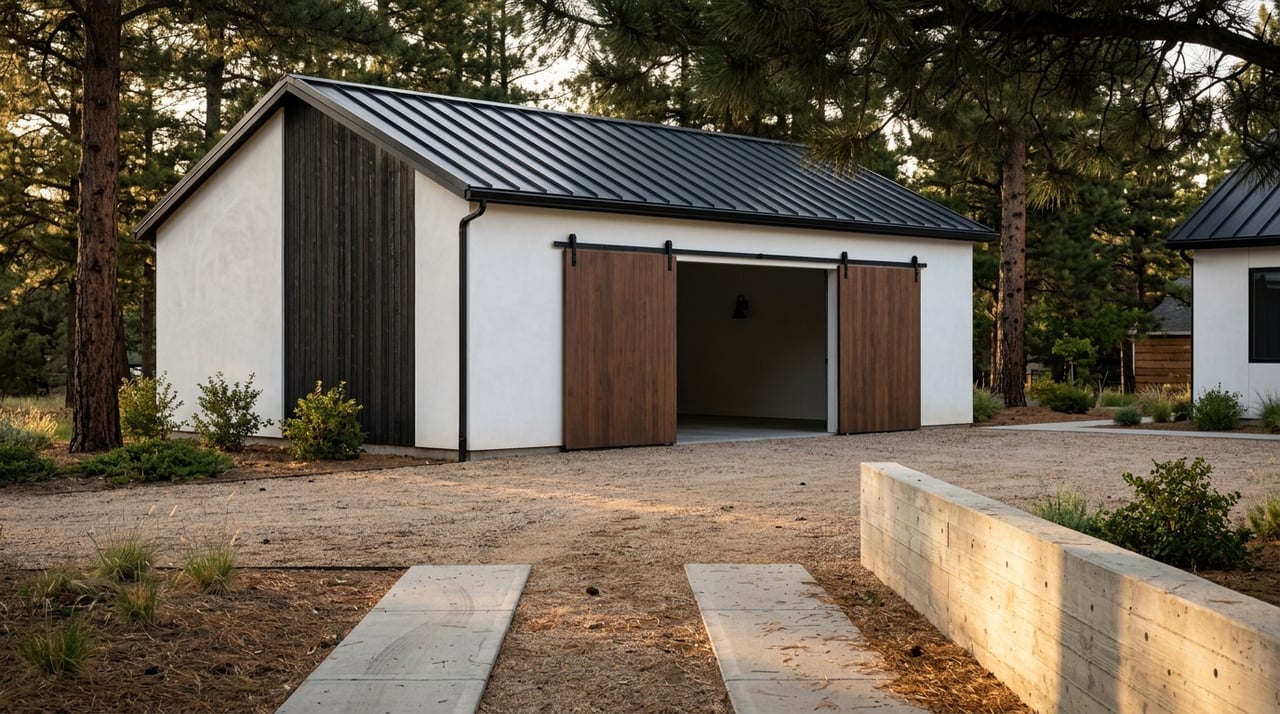
For many acreage buyers, the value of the property is tied to what else can be built there. A barn, run-in shed, tack room, detached garage, or workshop may be part of your vision, but the parcel has to support that use under county rules.
El Paso County’s current materials state that a site plan is required only for accessory structures greater than 200 square feet, and setbacks still apply to all structures. In residential districts, the total accessory structure footprint generally cannot exceed the footprint of the primary residence, but on lots of 2.5 acres or more it may be up to two times the residence footprint. On parcels of 35 acres or more, accessory structures are exempt from that footprint limit.
The sequence of construction also matters. County code says a permit for an accessory structure that requires a permit generally cannot be authorized before the principal structure is built, except in A-35.
If you are buying with long-term plans in mind, it helps to evaluate those plans before you make an offer. A property may work well for today’s house but not for the barn, shop, or additional improvements you expect to add later.
This is especially important in Black Forest, where zoning, wildfire spacing requirements, and recorded covenants can all affect placement and build-out. Thinking ahead can help you avoid buying a parcel that looks flexible but turns out to be constrained.
Water is one of the most important diligence items for acreage in Black Forest and northeast El Paso County. The Colorado Division of Water Resources says every new well that diverts groundwater must have a well permit, and its records can show allowable uses and available construction information.
The state also explains that groundwater in the Denver Basin aquifers is effectively mined rather than replenished. That makes it important to ask not just whether a well exists, but what the permit allows and whether the water source aligns with your intended use.
El Paso County adds another layer through its 300-year water reliability rule for new development in unincorporated areas. For vacant land buyers in particular, this means the right question is not simply, “Can I drill a well?” but whether the parcel’s long-term water documentation supports the use you are planning.
For improved property, pull the well permit and review the permitted uses. For vacant land, review water supply documentation early so you understand whether the parcel is viable for your plans.
If horses, irrigation, or future improvements are part of the picture, water review becomes even more important. A good acreage purchase starts with clear answers, not assumptions.
In Black Forest, septic is often just as important as water. El Paso County Public Health regulates on-site wastewater treatment systems, and records can be viewed online through the assessor property-search system, although not every parcel has complete records on file.
If you are considering additions, guest space, or barn-related living quarters, septic capacity should be checked early. A system sized for the current home may not support the future use you have in mind.
As of January 1, 2024, OWTS permit applications must be submitted by a licensed OWTS installer. The practical takeaway for buyers is that septic review should happen before closing becomes imminent, not at the last minute.
A beautiful setting does not help much if access is unclear or difficult. El Paso County requires legal and physical access by public right-of-way or by a recorded easement acceptable to the county.
Road conditions also deserve attention. County Public Works reports that the transportation network includes more than 2,000 centerline miles of paved and gravel roads, many gravel roads are maintained on a six- to eight-week schedule, and gravel roads are plowed during daylight hours only.
If a property is served by a private road, confirm who maintains it, how snow removal works, and whether the maintenance obligations are recorded. These are quality-of-life details, but they can also affect daily convenience, emergency access, and ownership costs.
Wildfire risk is part of the local planning context in Black Forest. Black Forest Fire Rescue offers free Firewise assessments and on-site consultations, which reflects how central mitigation is for property owners in this area.
County standards are also specific. In wildland areas, El Paso County requires Class A roof coverings, special mitigation for buildings closer than 30 feet to a vegetated slope, and at least 30 feet of separation between the main structure and accessory structures such as outbuildings, patio covers, and gazebos.
The county also requires at least one approved vehicular access route to each structure, and in some cases two access routes may be required. For a buyer, this means wildfire review is not just about insurance. It can also affect where future structures can go and what improvements may be needed.
Black Forest Fire Rescue states that the district’s ISO fire rating is 5, or 4 if a home is within 1,000 feet of a working hydrant. That is a useful reminder to bring insurance questions into the conversation early.
A home’s roof material, defensible space, tree density, driveway access, and water supply can all influence how practical and insurable a property feels. It is wise to review those factors before you are fully committed.
On acreage, even simple improvements can become more involved than expected. El Paso County states that land disturbance over 1 acre requires proof of a Colorado stormwater discharge permit and an El Paso County Erosion and Stormwater Quality Control Permit.
That can affect projects such as driveways, building pads, barns, corrals, drainage work, and larger clearing efforts. If you plan to reshape the site in a meaningful way, budget time and money for permitting and compliance.
When you buy acreage or equestrian property in Black Forest, the goal is not just to find a beautiful property. The goal is to confirm that the parcel truly supports the way you want to use it.
A strong review usually includes these steps:
Buying in Black Forest can be incredibly rewarding when the property fits both your lifestyle and the county framework that governs it. With the right preparation, you can evaluate acreage with a sharper eye and make decisions that support both your immediate goals and your long-term plans.
If you are considering acreage or equestrian property in Black Forest and want a measured, high-touch approach to the details, Lisa Cheponis can help you navigate the process with experienced guidance and local perspective.
Stay up to date on the latest real estate trends.







Ready to get what matters most to you in real estate? Helping you do so is Lisa’s true passion. With her expertise, tenacity, and devotion to your goals and dreams, you can experience the success you deserve. Reach out. Talk with Lisa. If it’s a good fit, you can be on your way to getting what matters most to you.